
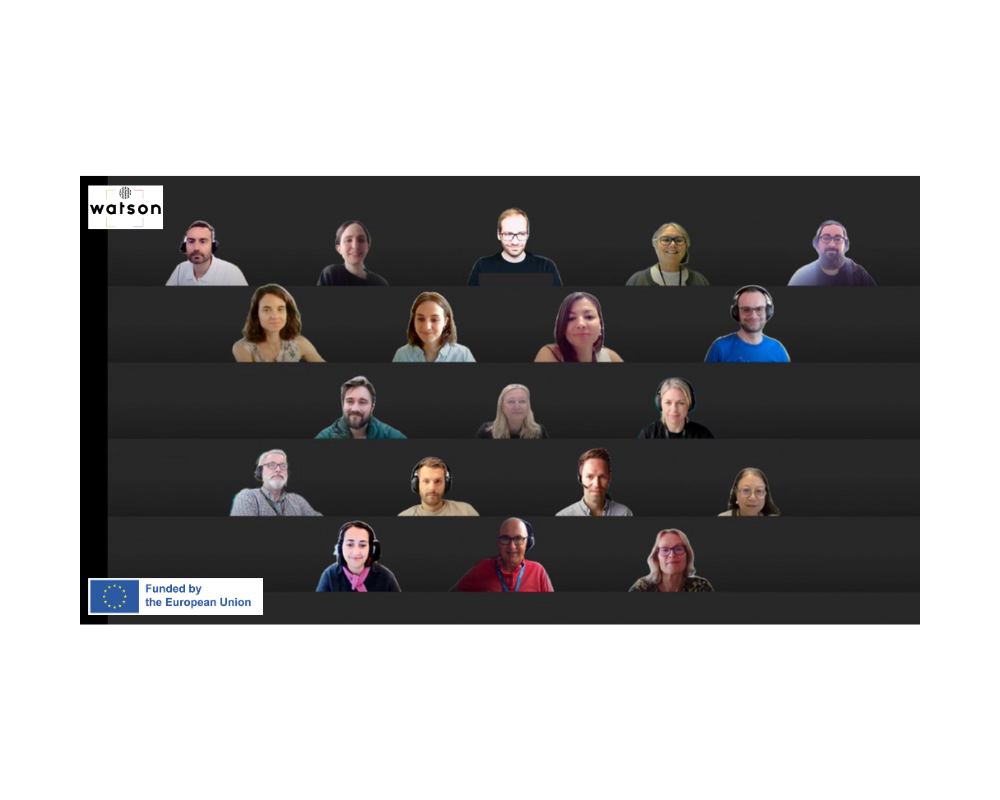
On June 26, 2025, the Watson project hosted an online workshop focused on combating white fish counterfeiting in Norway.
The session, organised by our partners from SINTEF Nord, brought together 26 participants from various sectors, including Norwegian Customs, the Norwegian Sales Organisation for Fish, the Norwegian Food Safety Authority, businesses representing potential end-users and internal project and pilot stakeholders.
Key sessions and activities
The workshop began with welcome and introductions by SINTEF Nord. Next, the Watson pilot and use cases were presented, explaining the white fish use case scenarios and outlining proposed technical solutions.
The session then explored the Digital Food Product Passport, presented by technology providers from Netcompany-Intrasoft. Participants learned about its functionality and how it can be implemented throughout the white fish value chain to enhance transparency.
Following this, UBITECH introduced the Early Warning System, a tool designed to detect and prevent potential fraud incidents in the white fish supply chain.
An open discussion allowed participants to share insights on both the Digital Food Product Passport and the Early Warning System, considering how these solutions could increase transparency and security from sea to plate.
The challenge: white fish vulnerability
The global seafood supply chain involves multiple actors: from fishers and processors to exporters and retailers.
Norwegian white fish, a high-value product, is particularly at risk due to:
- Mislabelling and species substitution
- Adulteration during transportation and storage
- Inconsistent temperature control, affecting quality and safety
With statistics showing that 20% of seafood samples worldwide are mislabelled and 35% transported at improper temperatures, there is a clear need for a reliable system to guarantee the authenticity and quality of Norwegian white fish, especially in international markets.
What can we do about it?
The Watson project is developing a blockchain-based platform to enhance traceability and authenticity in the Norwegian white fish supply chain. Key features include:
- Secure data sharing via blockchain
- Real-time monitoring of storage, production, and transport conditions through IoT sensors
- Non-copyable product labels (QR codes, NFC tags, RFIDs) to verify traceability and authentication
By integrating these technologies, our solution not only combats fraud but also ensures consumers receive high-quality, ethically sourced fish. Moreover, this approach can be extended to other seafood value chains, including salmon and king crab.
The white fish use case is one of six pilots under Watson, all aiming to tackle traceability and transparency challenges across different agri-food sectors.