
On 5-7 November 2025, the International Food Fraud Conference (IFFC) brought together global experts in Berlin to address one of the most pressing challenges in today’s food systems: the growing complexity and vulnerability of supply chains in the face of fraud.
The event was jointly organised by the Federal Ministry of Agriculture, Food and Regional Identity (BMLEH) and the National Reference Centre for Authentic Food (NRZ-Authent) of the Max Rubner-Institut (MRI), attracting 140 participants on site and 160 online, underscoring broad global engagement.
A call for stronger global cooperation
Opening the conference, Federal Minister Alois Rainer stressed how increasingly intricate global supply chains continue to create opportunities for fraudulent activity.
Reflecting on past high-profile incidents, he reiterated Germany’s strong commitment “to protect our consumers in the best possible way against fraud” and emphasised the critical importance of enhanced collaboration among national, EU and international authorities.
Watson’s contribution: climate, geopolitics and emerging fraud risks
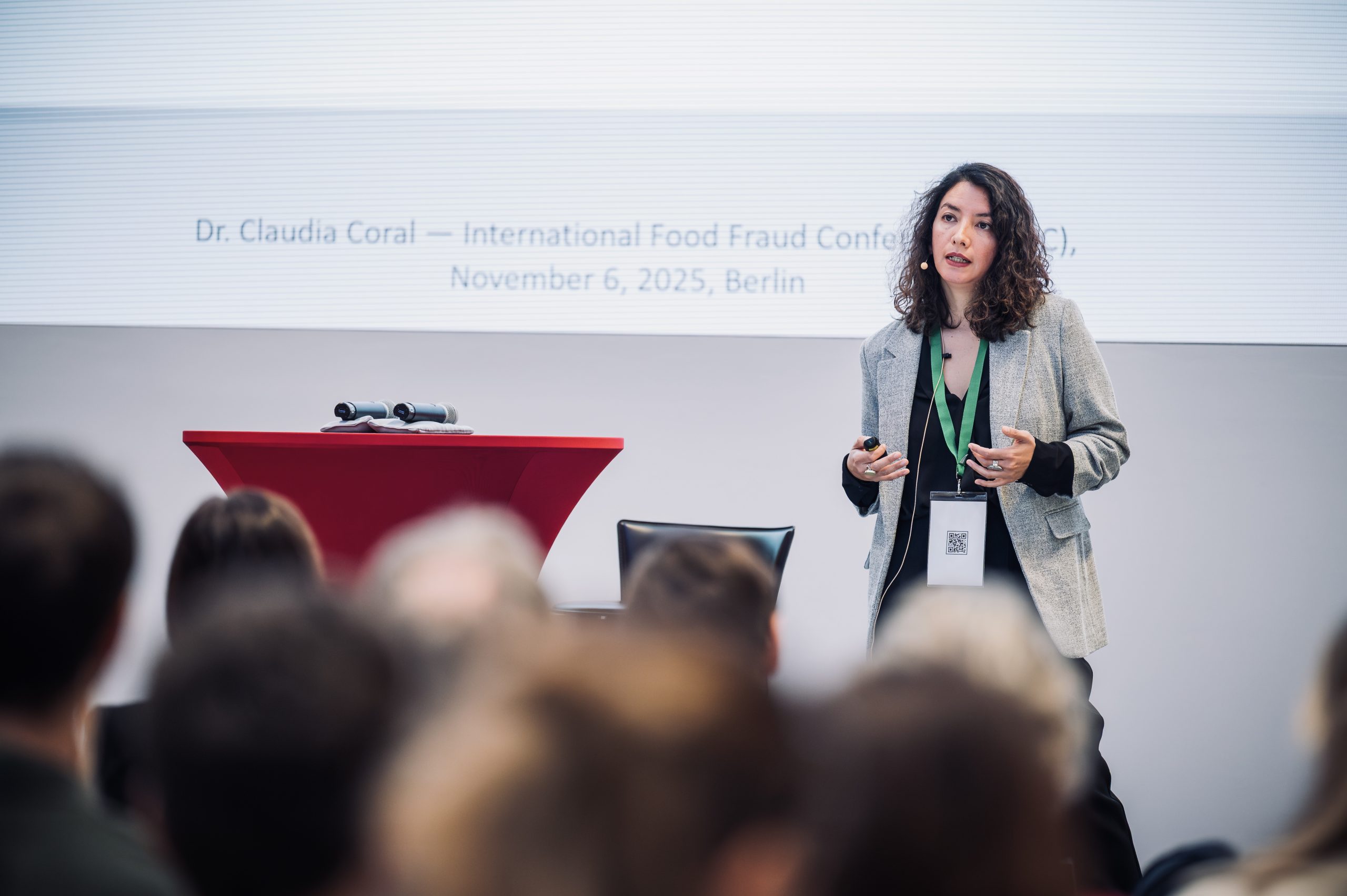
As part of the programme, our partner Dr. Claudia Coral, from the Agrifood Chain Management Group at Humboldt-Universität zu Berlin, participated in Panel II on Climate Change, Geopolitics and Economics, chaired by Carsten Fauhl-Hassek (German Federal Institute for Risk Assessment, BfR).
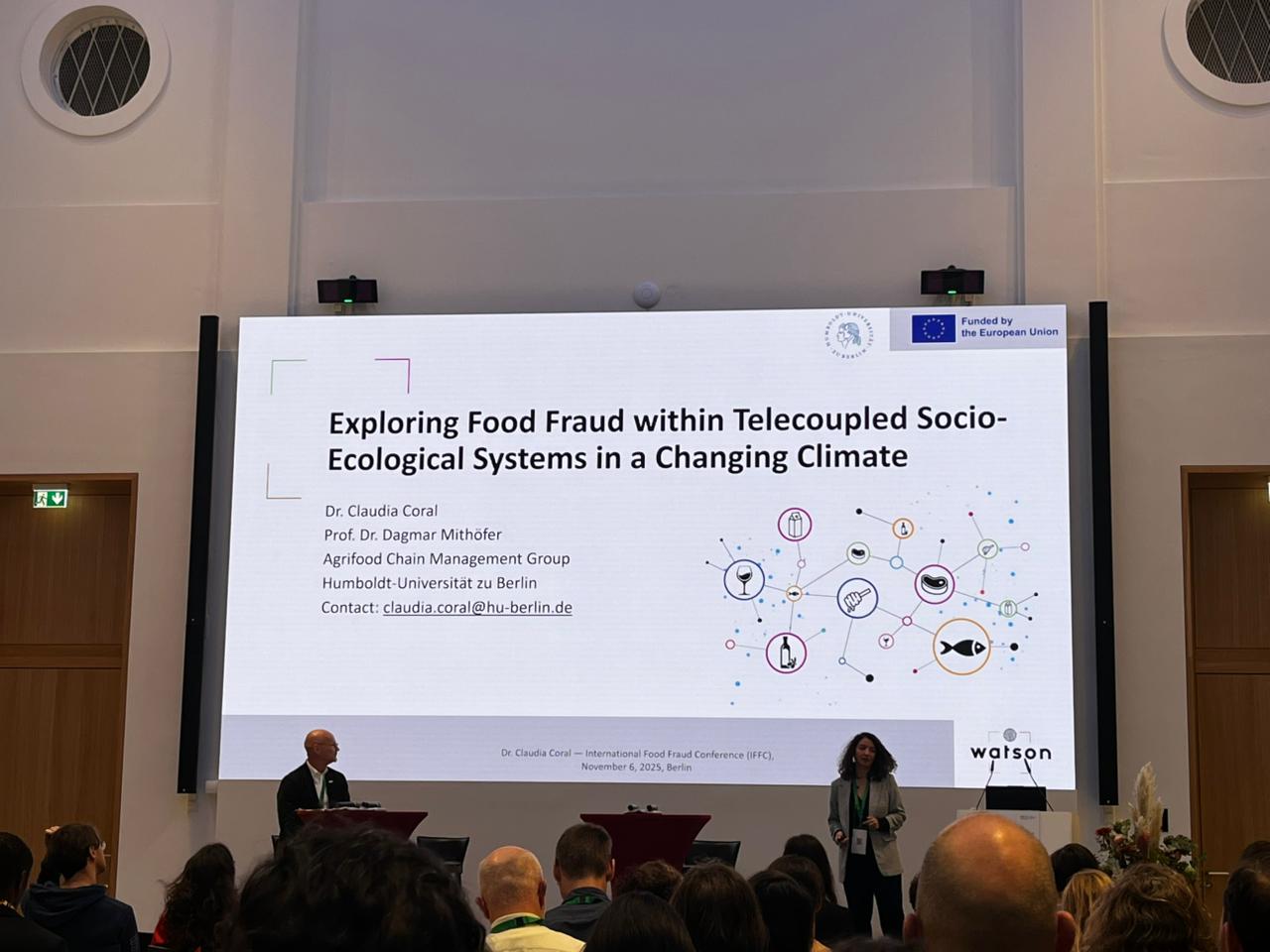
Dr. Coral delivered a spotlight lecture titled: “Exploring food fraud within telecoupled socio-ecological systems in a changing climate”. Her intervention highlighted how food fraud risks emerge from deeply interconnected environmental, political and economic pressures.
Alongside her lecture, Dr. Coral also co-moderated the workshops dedicated to climate change and to geopolitics and economics, together with working-group leads Selvarani Elahi, Timothy Wilkes (Food Authenticity Network), and Marc Lorenzen (BfR).
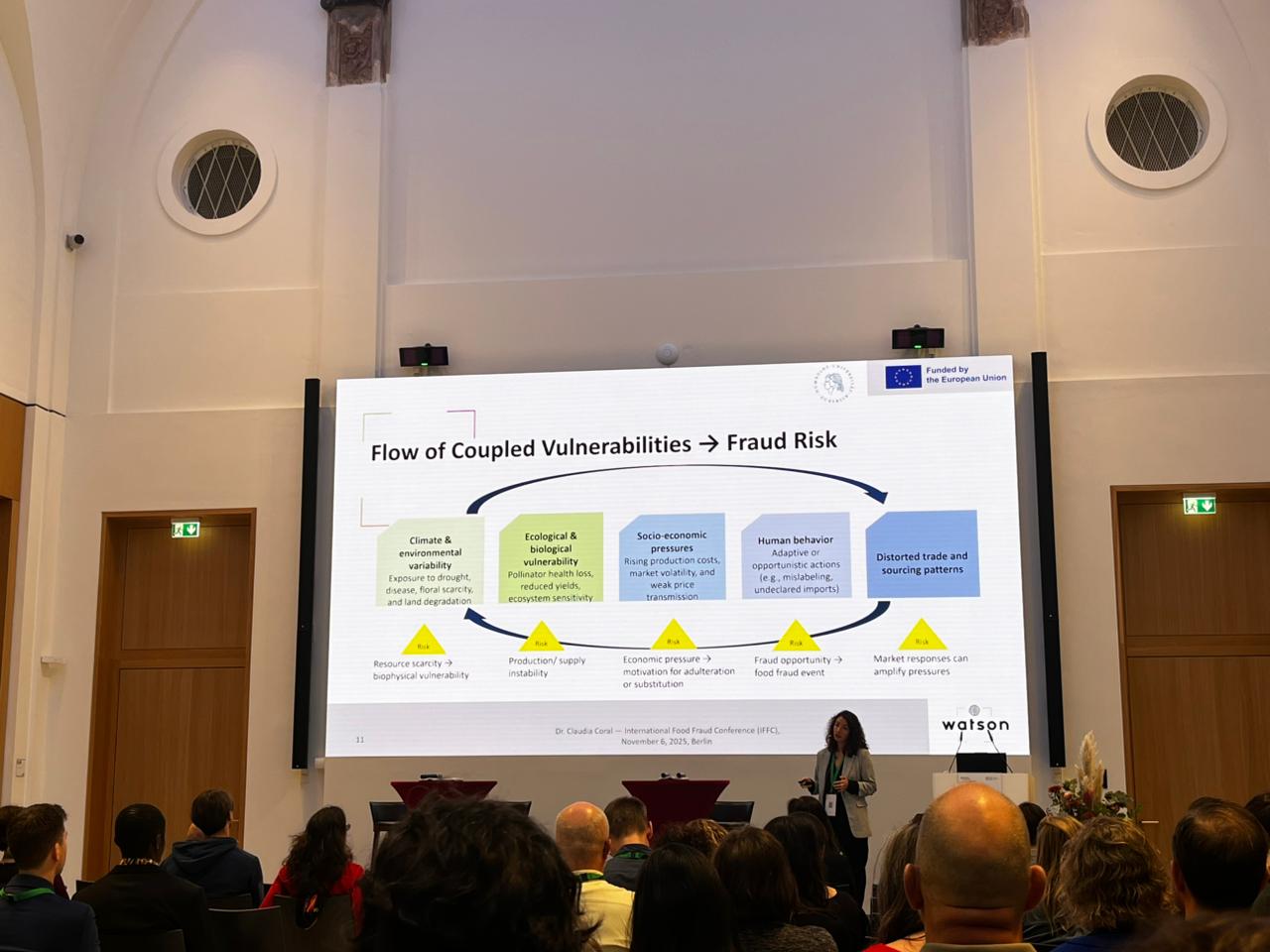
Discussions across the session made clear that future food fraud challenges cannot be addressed in isolation.
Climate impacts, geopolitical instability, market disruptions and shifting trade flows all interact in complex ways, demanding:
Cross-border cooperation;
Integrated monitoring systems;
Forward-looking research and policy strategies.
The conference concluded with a shared commitment to strengthen global collaboration in the fight against food fraud.
Watson is proud to have contributed expertise to this important dialogue and remains dedicated to supporting transparent, resilient and trustworthy food supply chains across Europe and beyond!