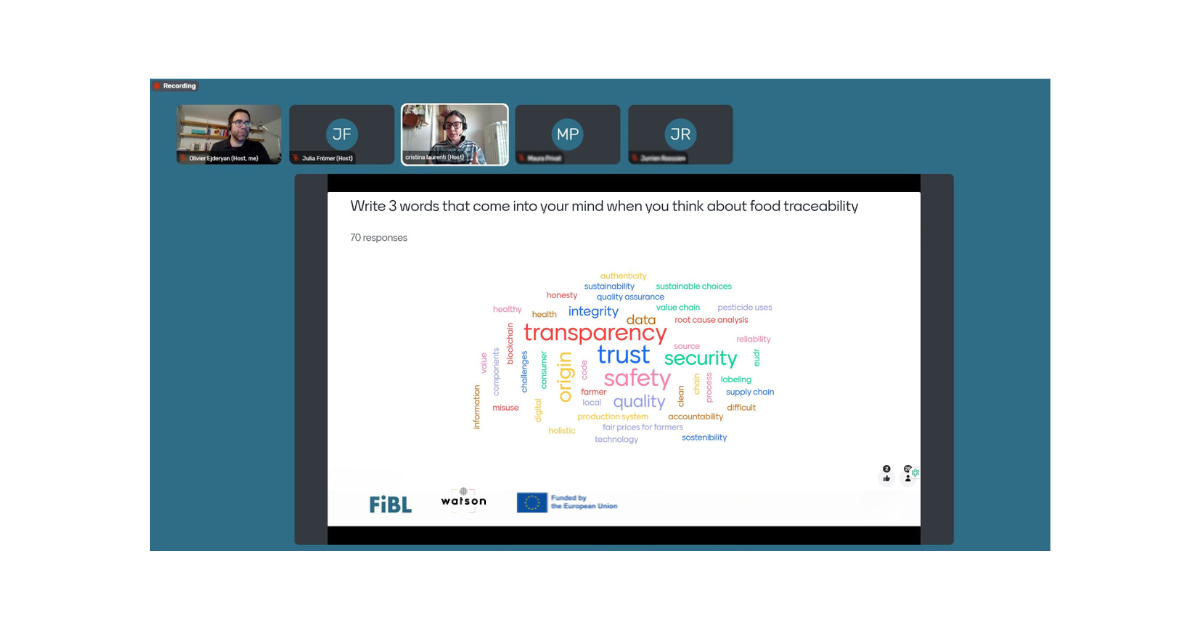
At the recent virtual FiBL Open Day – “Organic Transformation of Food Systems”, held on November 27th, 2024, WATSON partners Cristina Laurenti and Olivier Ejderyan from FiBL – Research Institute of Organic Agriculture, shared their views on food traceability, highlighting their research in the framework of WATSON.
A nuanced approach to digital traceability
The question of whether digital food traceability can support more sustainable food systems is complex, and the experiences of our partners in WATSON have highlighted some important insights:
Technological expectations and challenges
On the one hand, there is a strong expectation across most supply chains that digital solutions can drive sustainability and improve traceability. However, while technological advancements are critical, we must not overlook the organisational, relational and institutional factors that play a key role in the effectiveness of these solutions. For instance, while there is commitment to environmental sustainability, we also need to address potentially exclusionary dynamics that could undermine the very sustainability goals these technologies aim to achieve.
Fostering connections between small producers and consumers
For smaller producers committed to the agro-ecology principles, there is certainly potential for digital traceability to support their work. Yet, successful implementation requires collaboration between technology developers and producers.
Thus, it is essential to set realistic expectations on both sides and ensure that these tools are tailored to the specific needs and contexts of small-scale operations.
Only then can we foster genuine connections between producers and consumers, ultimately promoting a more sustainable and inclusive food system.
Looking ahead
It is quite clear that the future of food traceability lies not just in technology, but in how we use these tools to create a more sustainable, transparent and equitable food system for all.
Digital traceability has the power to transform the way we think about food production, distribution and consumption, but it will only succeed if we remain mindful of the broader social, economic and environmental context.
Stay tuned for more updates from the WATSON project as we continue our journey towards a more sustainable and trustworthy food system!